Arthur Katzemich
Kriminal-Obersekretär
|
Burkhard Martin Dietmar Weitz writes about his grandfather, Arthur Katzemich, who was born in 1900 in Dellbrück (now Cologne). The older sister, Manja, married Hugo Gernsbacher, a Jew from Bühl (Black Forest) in 1923. She was the main organizer of the 1933 World Congress of Esperanto in Cologne. Her husband fled to Palestine in 1936, and Manja followed a year later. |
|
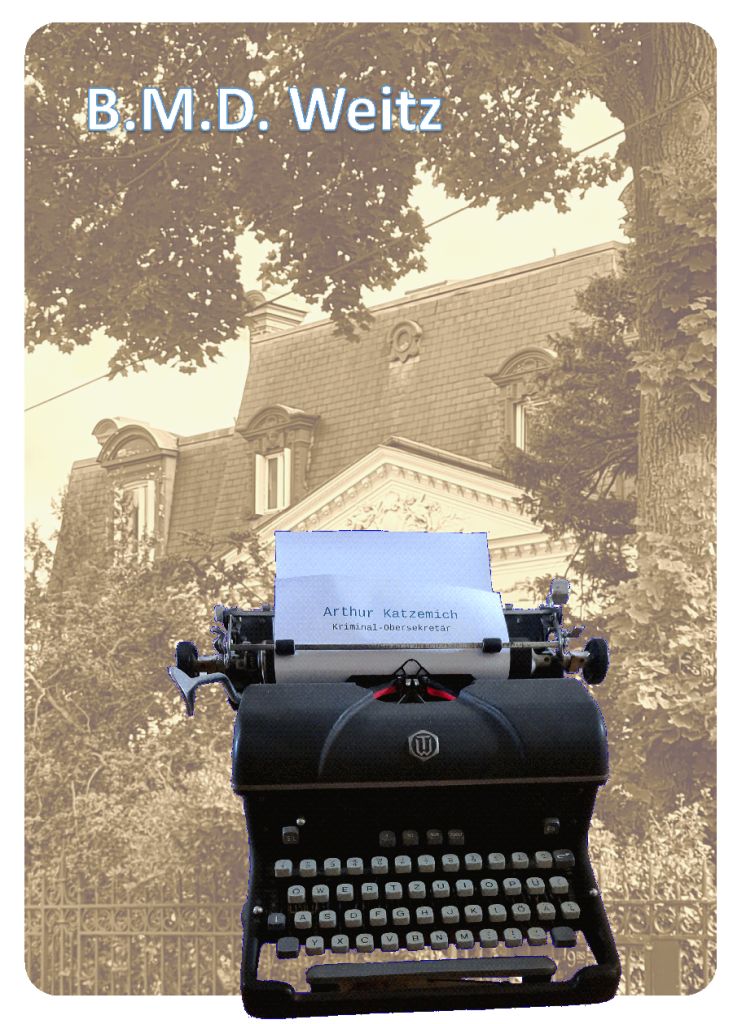
|
Arthur married Christel Höfer (also born in Cologne in 1900) in 1924, and they had three children (Burkhard's mother Lieselotte, Helmut, and Ingrid). The book intersperses family stories with Arthur's notes and documents from the extensive dossier he compiled himself. Arthur's career began as an assistant detective in the police after the First World War. He distinguished himself in detecting counterfeit money, but with the advent of the Nazi regime (1933), he was forced to transfer to the Gestapo in Trier. After a peaceful initial period, a new chief ordered him to take action against the Catholic Church and Jews, which he refused due to his religious and humanitarian convictions. Consequently, he was suspended and transferred to Koblenz. There, he attempted to find a job in the civilian sector, which would have cost him his civil servant status and pension rights, but this too was denied him on the basis of an order from Gestapo chief Heydrich. During the war, Arthur was stationed in France in 1940 and, from 1942, was head of the Gestapo for the Seine-et-Oise district in Maisons-Laffitte. He and his unit carried out orders assigned by the SIPO/SD leadership in Paris, including the brief detention of former French prime ministers Blum and Daladier, who were to be deported to Buchenwald after the failed Riom trial. After the war, Arthur was extradited to France in 1948 and was indicted by the military tribunal on 100 counts of murder, assault, and deportation. |
|
His French lawyer, Pierre Langlais, with the help of Arthur’s Jewish brother-in-law, was able to refute everything, and most witnesses, including the former prime ministers and several Jews whom Arthur had been ordered to shoot, a high-ranking French police officer, and many other people who had come into contact with Arthur, testified that they had been treated well and partly owed their lives to Arthur. |
|